Tuesday, April 4, 2017

New Adult Annotation

Product Details


Author: Jamie McGuire

Title: Beautiful Disaster

Genre: New Adult

Publication Date: August 14, 2012

Number of Pages: 418

Geographical Setting: Eastern United States

Time Period: Contemporary 

Series (if applicable): First of a duology, so far.

Plot Summary: Anxious to escape her old life, Abby enrolls in a small college on the east coast. America enrolls too, hoping to assure that her best friend does not fall back into the darkness  of her past. Abby encounters the university's "Walking One-Night Stand" and is able to resist his charm and rugged good looks. Has Travis met his match? The challenge is on. What begins as a friendship that has the whole campus talking, develops into oh so much more. Tag along with Abby, Travis, America, and her boyfriend Shepley while they learn to navigate college, relationships, and life. 

Subject Headings: Man-Woman Relationships; Fiction.
                                 College Stories.


Appeal:
3 Terms that Best Describe this Book: First-person narrative
                                                                  Fast-paced
                                                                  Engaging

Similar Authors and Works (why are they similar?): All of these stories are engaging, first-person narrative, contemporary romances.

Book Jacket


Bet Me by Jennifer Cruise

Book Jacket


Natural Born Charmer by Susan Elizabeth Phillips

Book Jacket


Call Me Irresistible by Susan Elizabeth Phillips

Book Jacket


Forever Buckhorn by Lori Foster

3 Relevant Non-Fiction Works and Authors:
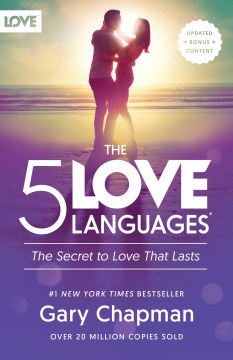


The 5 Love Languages: The Secret to Love That Lasts by Gary Chapman
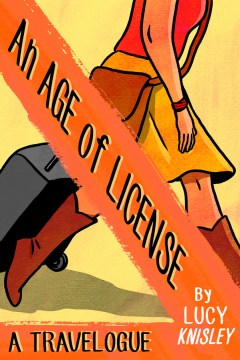

An Age of License: A Travelogue by Lucy Knisley

A Fighter's Heart: One Man's Journey Through the World of Fighting by [Sheridan, Sam]

A Fighter's Heart: One Man's Journey Through the World of Fighting by Sam Sheridan



The Professor, the Banker, and the Suicide King: Inside the Richest Poker Game of All Time by Michael Craig

3 Relevant Fiction Works and Authors:


Walking Disaster: A Novel (Beautiful Book 2) by [McGuire, Jamie]


Walking Disaster by Jamie McGuire
Collide: Book One in the Collide Series by [McHugh, Gail]

Collide by Gail McHugh


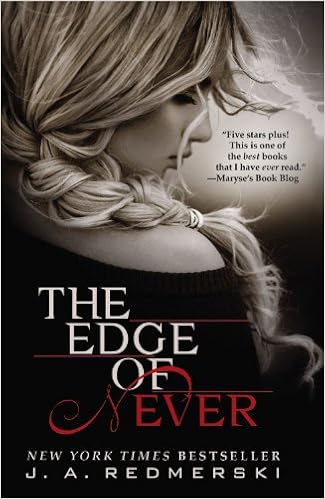
The Edge of Never by J. A. Redmerski

Friday, March 31, 2017

Week 12 Prompt

Readers' Advisory Matrix for Martha's Vineyard: Isle of Dreams, By Susan Branch

Image result for susan branch isle of dreams images

      1. Where is the book on the narrative continuum?
          Highly narrative (reads like fiction)

      2. What is the subject of the book? 

           Rebuilding a life after an unexpected divorce from the love of your life and what you thought was a fairy tale marriage.

      3. What type of book is it?

           A memoir

      4. Articulate appeal

           What is the pacing of the book?

            Leisurely

            Describe the characters of the book.

            The story is character-driven. It is about the author Susan Branch who moves from California to Martha's Vineyard after a sudden divorce.

            How does the story feel?

            Moving, inspiring, and heartwarming.

            What is the intent of the author?

            To share her story with her followers.

            What is the focus of the story?

            The way her move changed her life in so many unexpected and positive ways.

            Does the language matter?

            Yes.

            Is the setting important and well described?

            The setting is vital to the story. It is described in great detail.

            Are there details and , if so, of what?

            There are many details such as: famous quotes, mouth-watering recipes, hundreds of personal photographs, and charming, detailed, original watercolors by the author.

            Are there sufficient charts and other graphic materials? Are they useful and clear?  

            None. 

            Does the book stress moments of learning, understanding, or experience?

             All three. She learned to have faith in her talent as an artist, she understood that she could be self-reliant and independent, and she experienced the seasons for the first time, the kindness of strangers, and serendipity.
      
      5. Why would a reader enjoy this book (rank appeal)?

             1. Heartwarming                 2. Richly detailed                3. Engaging


Image result for susan branch spring  Image result for susan branch spring

Resources:

Readers' Advisory Guide to Nonfiction by Neal Wyatt

Amazon.com
https://www.amazon.com/Marthas-Vineyard-Dreams-Susan-Branch/dp/0996044027/ref=la_B001H6MRVQ_1_1?s=books&ie=UTF8&qid=1490995275&sr=1-1

Baker & Taylor
http://ts360.baker-taylor.com/_layouts/CommerceServer/ItemDetailsPage.aspx?ngbtkey=0018278322

Susan Branch's Blog
http://www.susanbranch.com/2017/03/go-go-go-and-happy-spring/?utm_source=feedburner&utm_medium=feed&utm_campaign=Feed%3A+SusanBranchBlog+%28Susan+Branch+Blog%29

Susan Branch's Website
http://www.susanbranch.com/

Wednesday, March 29, 2017

NonFiction Annotation


Author: Bailey, Elisabeth Tova


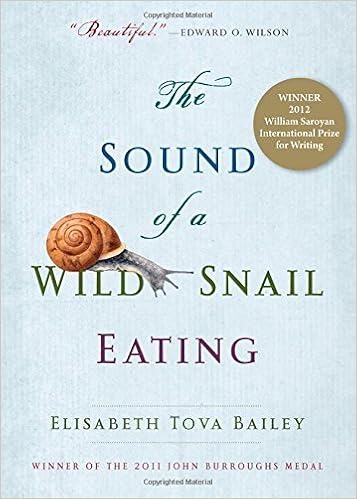
Title: The Sound of a Wild Snail Eating

Genre: Autobiographies and Memoirs; Family and Relationships; Life Stories; Nature                         Writing

Publication Date: August 24, 2010

Number of Pages: 190 pages

Geographical Setting: New England

Time Period: early 2000's

Plot Summary: While vacationing in the Alps, Elisabeth contracted a rare virus affecting her nervous system. As her autonomic nervous system ceased to function, her condidtion quickly worsened, leaving her bedridden and in isolation for a year. Used to being an active hiker and gardener on her little colorful, life-filled farm in Maine, she was forced to take a room closer to a caregiver. Here, she laid, flat on her back, unable even to sit up, staring at a white ceiling and walls. Her bed was situated so that she was unable to see out of the only window in the room.

Hoping to bring her cheer Elisabeth, a friend brought her a pot of violets from the woods on her farm. On a whim, she picked up a wood snail that she also found in the woods, and nestled it under the violet's leaves. Elisabeth was aghast that her friend would bring her something that needed needed to be cared for when she couldn't even take care of her own needs.

What follows is the story of a year in her recovery where Elisabeth's curiousity and keen mind are reawakened. She learns about this particular species of wood snail: what it eats; the kind of habitat it needs; about its sex life, and discovered its routine, likes and dislikes, and habits. Watching the snail overcome obstacles and situations helped Elisabeth. She came to really care about it. The snail cared about life, which helped her to begin to care about her own life again. Toward the end of the year, the conditions in the terrarium were such that the snail laid hundreds of eggs. Elisabeth was able to watch them hatch and grow. She may be the first person to have done so!

Elisabeth continued to research her snail as she recovered and added a lot of biological information back into her story. The story is uplifting even though Elisabeth is very ill and no one knows how to help her. Her writing style is conversational and very descriptive, but never overly academic. I'm sure that many people wonder why they would ever want to read a book like this, but I urge you to give it a try. You won't be sorry.

Click on this for an even more gowing review: 
https://www.bookbrowse.com/mag/reviews/index.cfm/book_number/2476/the-sound-of-a-wild-snail-eating#reviews

Link to the author's website where you can watch the snail and even hear it eating:
http://www.elisabethtovabailey.net/


Subject Headings: Library Subjects.
                                 Snails as pets: Anecdotes.
                                 Gastropoda: Physiology.
                                 Gastropoda: Anatomy.
                                 Baily, Elisabeth Tova: Health.
                                 Chronically ill: Biography.
                                 
                                 General Subjects.
                                 Nature/Ecology.
                         
                                 Academic Subjects.
                                 MOLLUSCA

                                 BISAC Subjects

                                 NATURE/Essays
                                 NATURE/ Animals/ General

3 Appeal Terms that Best Describe this Book: Pace: Leisurely
                                                                              Tone: Reflective
                                                                              Writing Style: Engaging

Similar Authors and Works: These books all share the genres of Life stories and Nature Writing and the appeal terms of Reflective and Engaging. These books tell the story of individuals who have the unique ability to entertain while enlightening and educating us about the world around us.


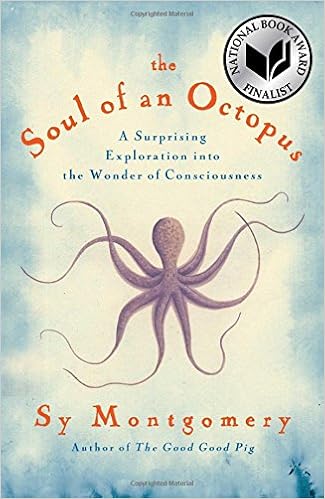
The Soul of an Octopus by Sy Montgomery


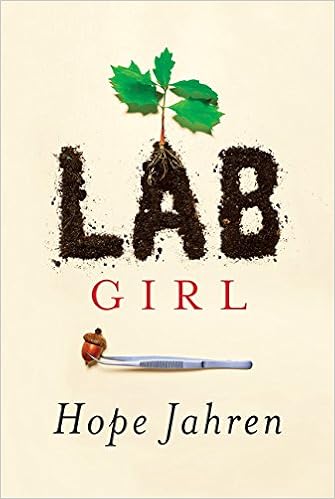
Lab Girl by Hope Jahren


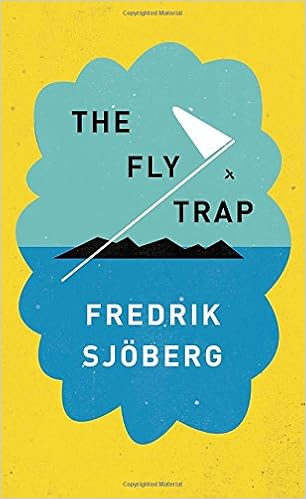
The Fly Trap by Fredrik Sjoberg


3 Relevant Non-Fiction Works and Authors: All of these books are memoirs of three very different women who find solace and a new sense of themselves by undertaking solitary journeys in nature.


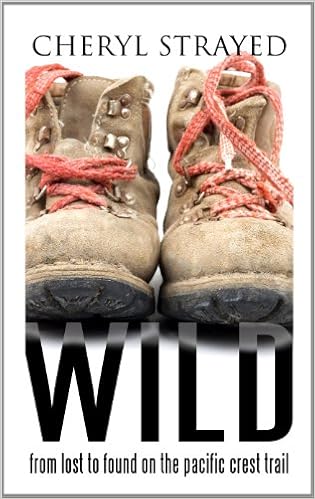
Wild by Cheryl Strayed

Product Details


Grandma Gatewood's Walk by Ben Montgomery


H is for Hawk by Helen Macdonald


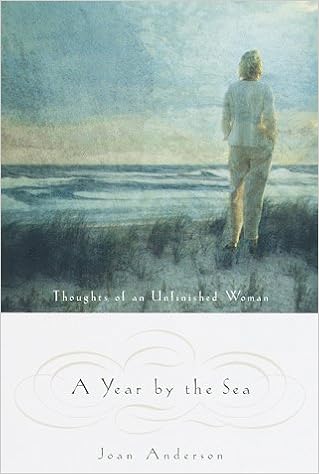
A Year  by the Sea by Joan Anderson


3 Relevant Fiction Works and Authors: All of these stories center around relationships with animals. They have emotional depth which captivates the reader and in the end are tales of survival.

Spill Simmer Falter Wither by [Baume, Sara]

Spill Simmer Falter Wither by Sara Baume


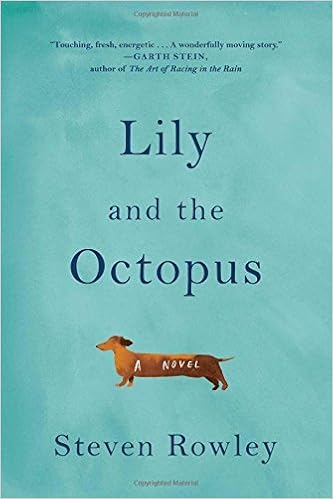
Lily and the Octopus by Steven Rowley


Life of Pi by [Martel, Yann]

The Life of Pi by Yann Martel


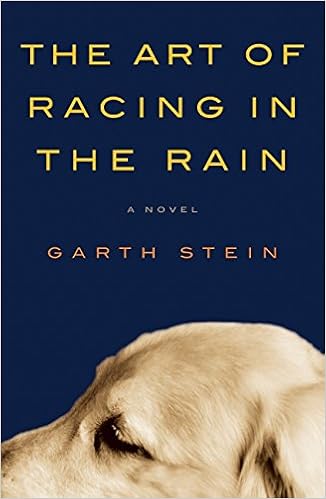
The Art of Racing in the Rain by Garth Stein

Resources used:

The Readers' Advisory Guide to Nonfiction by Neal Wyatt

Amazon.com
https://www.amazon.com/s/ref=nb_sb_ss_i_2_12?url=search-alias%3Dstripbooks&field-keywords=the+sound+of+a+wild+snail+eating&sprefix=the+sound+of%2Cstripbooks%2C152&crid=1KFSTVZPTZRGF&rh=n%3A283155%2Ck%3Athe+sound+of+a+wild+snail+eating

Baker & Taylor
http://ts360.baker-taylor.com/_layouts/CommerceServer/ItemDetailsPage.aspx?ngbtkey=0008454018&isfromsearchresults=1

BookBrowse
https://www.bookbrowse.com/reviews/index.cfm/book_number/2476/the-sound-of-a-wild-snail-eating

BookList
https://www.booklistonline.com/The-Sound-of-a-Wild-Snail-Eating-Elisabeth-Tova-Bailey/pid=4190587

GoodReads
https://www.goodreads.com/book/show/8303977-the-sound-of-a-wild-snail-eating?ac=1&from_search=true

Saturday, March 25, 2017

Week 11 Prompt

In her article, Reading with Your Ears, Kaite Mediatore gives many examples of how audiobooks change appeal factors for readers. Most importantly, she adds a fifth element, audible presentation, to the four that were introduced by Joyce Saricks  and that we have come to rely on for print books; pacing, characterization, story line, and frame. Mediatore defines audible presentation as "how all the above appeal factors blend together when narrated for a recorded book." 

Mediatore states that "narration changes and intensifies every element of a book's appeal...how a narrator approaches the pacing can determine how interested the reader-listener becomes in the book... how the pace of the book and the pace of the narrator work together is imperative...
How well a narrator adopts different accents or pitches in voice to distinguish between characters is a necessary element to the audio book." Mediatore notes that some structures in stories do not translate well into an audio format. These structures might include: article excerpts; diary entries; e-mails; or letters. 

Mediatore adds, "An element that includes tone, mood, atmosphere, and details, frame is often hard for readers to describe and can be difficult for readers advisors to match." She suggests "pairing with another appeal element" to make the readers' advisory interview more successful for the reader. Elements such as music, sound effects, or additional readings may also add to the frame of the audiobook. Readers may choose titles across many genres simply because of a narrator that they prefer. They may also stop listening to a book because the narrator has not successfully drawn them into the story. 

If a patron has no preference for the narrator, offering suggestions become much more difficult for the readers' advisor. The back of the case is the only space for description. It should include whether the book is abridged, the name of the narrator, the total time of the reading, and the number of discs included.  The advisor has no way of knowing if there are any "audible extras" or how well the narrator handles the task. 

In her article, E-books and Readers' Advisory, Katie Dunneback describes how e-books present an entirely different set of changes for appeal factors. Display options are the most direct factors affecting the reader's immersive experience when compared to reading a print book. The size and weight of the device will make a difference to those readers who prefer to read only paperback or only hardback books. For those who like the feel of a book, a choice of covers for the device is a necessity. Readers with physical restrictions will be pleased that they can resize the font, the spaces between words, and the margin size and that they can find devices with text-to-speech capability. A heavy, cumberosme device would be difficult for someone in a hospital or nursing home or having arthritis to hold for long period. 

E-books may also contain additonal features not available in the print version. They may also encourage early literacy skills in preschoolers and reluctant readers. In her article: E-Books vs. Print: What Parents Need to Know, Jenny Deam notes that many e-books are interactive and include add-ons which enable the child to zoom in on a word to get a definition or a connection to their real world which increases their vocabulary. Many e-books light up each word as it is read aloud helping the child focus providing early word recognition. E-books have been extremely successful helping non-native-English speakers increase their vocabularies. Visual learners are especially attracted to this format.

Not having an actual book in your hand can greatly affect knowledge of the genre. Less information about the book and the author is available. We cannot flip through the book to see how long each chapter is, if the text is full of dialogue which might indicate an amusing character, or if there are long paragraphs which could help indicate pacing and writing style. Feeling the weight and seeing the pages of a print book shift from the right to the left gives the reader a sense of how much of the story they have read and how much they have left to go. Much like being able to sense how much time you have left by looking at an analog clock or watch is missing when using a digital format. It is difficult to flip back and forth to reread passages or double check what was read with audiobooks. 

The readers' advisory interview is especially important when recommending these formats. Focusing on what appeal factors are crucial to the reader's experience will go a long way towards providing suitable suggestions to the reader. Mediatore suggests a way to listen to a book in fifteen minutes, which might work in theory, but as the sole selector for all materials across all mediums for my library, I use every available method for ratings and reviews that I can find.

Audiobook and ebook reviews have not always been easy to find, but many sources are now available. In February, ALA announced that they will begin including audiobooks in their YALSA blog, the Hub: Your Connection to Teen Collections. (http://www.yalsa.ala.org/thehub/)

NoveList allows you to search by appeal elements and limit by format as well. Kirkus and BookList regularly include ebook format ordering information. Library Journal (http://reviews.libraryjournal.com/category/media/audio/), and School Library Journal (http://www.slj.com/category/reviews/multimedia/both include media reviews monthly. BookList offers reviews of audio books also. (https://www.booklistonline.com/SearchResults.aspx)

References:
Reading with Your Ears: Readers' Advisory and Audio Books by Kaite Mediatore
E-books and Readers' Advisory by Katie Dunneback
Steaming up the Circ Desk: Are Ebooks Changing What Our Patrons Read? by Carrie Genovese and Dr. Andrea Copeland's PowerPoint presentation
E-Books vs. Print: What Parents Need to Know by Jenny Deam 
http://www.scholastic.com/parents/resources/article/developing-reading-skills/e-books-vs-print-what-parents-need-to-know